CiSB Prep
Prepare for the IStructE Certificate in Structural Behaviour
The exam tests whether you understand how structures behave. David Brohn’s course and textbook teach exactly that: reading a structure by eye, before any calculation.

CiSB Prep
The exam tests whether you understand how structures behave. David Brohn’s course and textbook teach exactly that: reading a structure by eye, before any calculation.
£254
These courses are preparation, not accreditation. They are not accredited, endorsed or approved by the Institution of Structural Engineers, and nothing on this page should be read that way. The Institution runs its own Structural Behaviour Course; what is offered here is preparation for the understanding the examination tests.
The same preparation serves both routes: the Certificate in Structural Behaviour, which tests whether you can read a structure by eye, and the Chartered Membership examination, which asks you to design with that judgement under time pressure. The Institution recognised David Brohn’s work in this field with its President’s Award in 2015.
2 hours
Invigilated, online
20
Multiple-choice questions
70%
Pass mark
GIStructE
Designation once you pass
Exam details from the Institution of Structural Engineers. Check istructe.org for current dates, fees and rules. This course is independent of IStructE and is not an Institution resource.
1
The questions test how structures deflect and carry load. That is what David teaches.
2
Sketch the deflected shape, read the bending moments from it, and most options can be ruled out at a glance.
3
Twenty questions in two hours. Knowing the answer by eye leaves time to check.
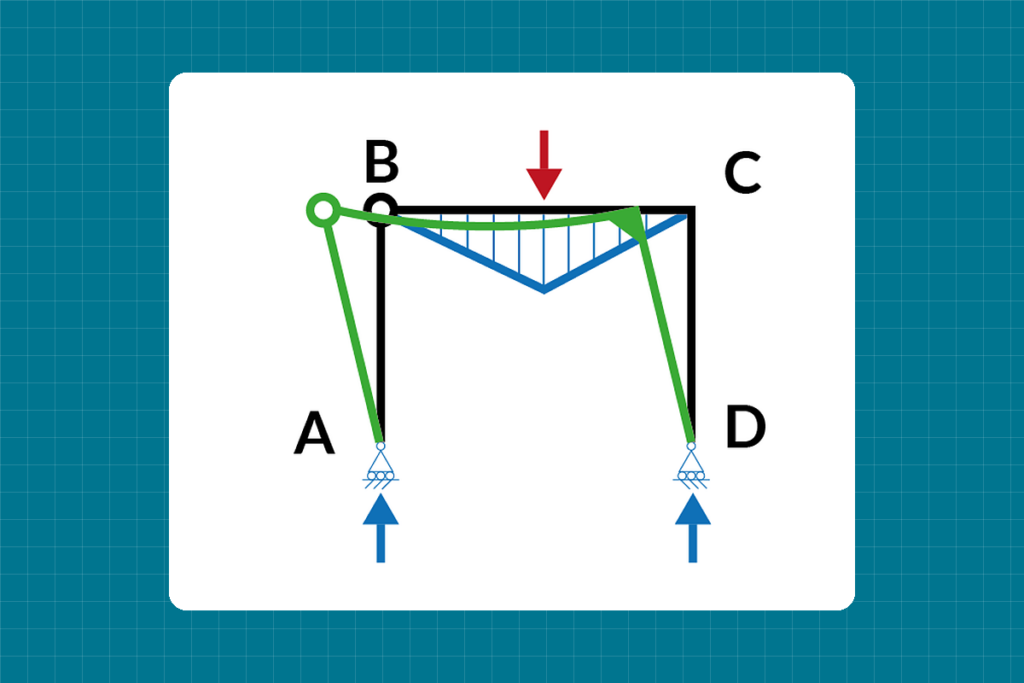
The course
16 video lessons on beams, frames and portal frames, with practice problems, video solutions and a certificate. The course Arup commissioned in the 1970s, now online.
£235
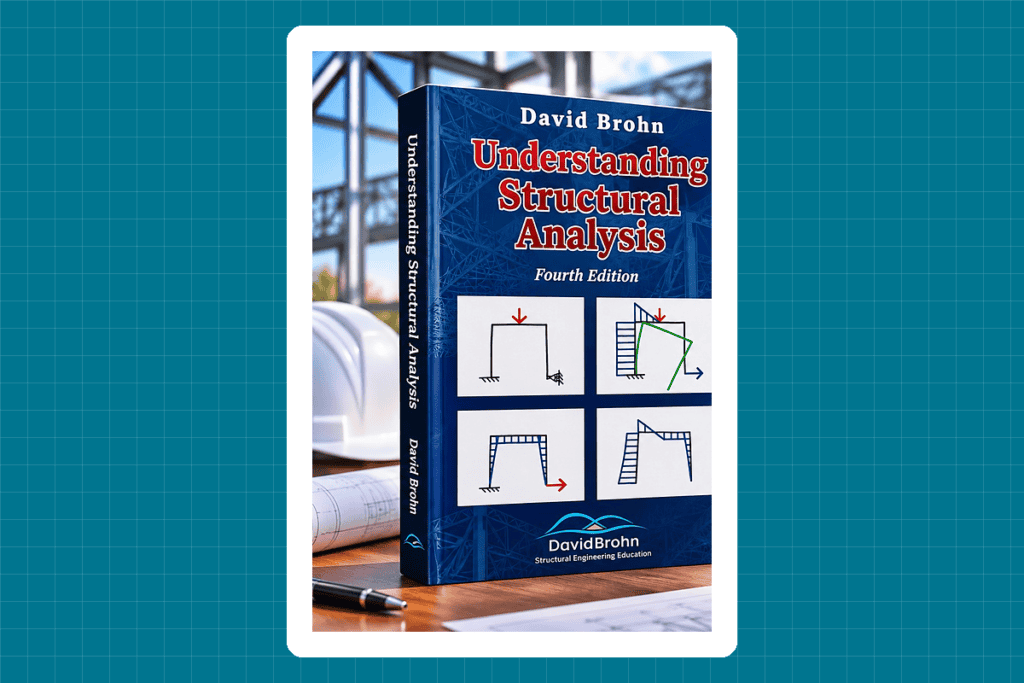
The textbook
David’s textbook, first published in 1984 with a foreword by Sir Ove Arup. The reference you’ll keep using after the exam.
£49
Chartered Membership is not an arithmetic test. The examiners are looking for evidence that you can choose a structural form, explain why it works, recognise where it is vulnerable, and know when an answer from a computer is wrong. Those are judgement skills, and judgement is built by looking at structures until you can predict what they will do.
Most candidates arrive with a strong numerical toolkit and a weak qualitative one. The work of preparation is not learning more analysis; it is learning to look at a beam, a frame or a slab and see the deflected shape and the bending moment before any software is opened.
Deflected shapes, load paths, and sketching bending-moment diagrams by eye. If you take one course before the exam, take this one. It is the skill the examiners are probing and the one most candidates have never been taught explicitly.
How a structure can be modelled, what each method assumes, and why two valid models can give different answers. This is where you learn to interrogate output rather than accept it, which is what a scheme-design question is really testing.
Takes the behaviour work and applies it to choosing and sizing a structure: preliminary sizing, the consequences of a choice, and the reasons a scheme is the way it is. Intended to follow the Behaviour course.
Taught by Owen Brooker, Chair of the Institution’s Technical Publications Panel. Two courses covering the code as it is applied: shear and punching shear, fire resistance, detailing and serviceability, with worked examples.
A case study built around the timber arch at Cribbs Causeway, designed by Ian Duncan. You see the analysis, the design and the erection, and are asked to reason about the choices before you hear the designer explain them.
For IStructE exam preparation, the course directly supports success by developing the exact skills needed for the institution's challenging design questions.
With most design done by software programs in today's industry, having this background knowledge will enable me to spot any mistakes produced by the computer software.
The first chapter on qualitative analysis of Frames was a revelation. … My success in designing complex structures would not have been possible without the lessons I learned from your book.
The Brohn Test is the free version of the diagnostic used on graduates for fifty years: a set of loaded beams and frames, and a box to sketch the bending-moment diagram for each. It tells you something an exam result will not — whether you can see the behaviour, or whether you have been calculating around it.
Take it before you buy anything. If you score well you may need only the Eurocode courses; if you do not, you now know what the revision was missing.
No. It is David Brohn’s independent course. The Institution runs the exam; this course builds the understanding the exam tests.
The course stands on its own. The textbook goes deeper and is the reference most engineers keep using, which is why the CiSB package includes it.
Yes. Companies can buy multiple seats and pay by invoice. See licences for teams.
Through the Institution of Structural Engineers. Check istructe.org for current dates and fees.
Take the free Brohn Test. Three frames, marked straight away, so you know where you stand.