
AI CAN GIVE YOU THE ANSWER.
CAN YOU TELL WHEN IT'S WRONG?
AI is already being used to produce structural calculations, technical explanations and engineering information.
This is no longer a future problem. Engineers need the understanding and judgement to recognise when an AI-generated answer is wrong.
THE PROBLEM IS HERE
AI-generated structural information is already entering professional engineering practice.
THE ANSWER CAN LOOK RIGHT
Detailed and convincing calculations can still contain fundamental structural errors.
THE ENGINEER MUST CHECK
Understanding structural behaviour gives you the ability to question, predict and check the result.
AI CAN PRODUCE AN ANSWER. CAN YOU CHECK IT?
This is no longer a theoretical concern for structural engineers.
A recent CROSS Safety Report described a case where AI-generated structural calculations were used to justify additional roof loading.
The calculations appeared detailed and credible, but contained fundamental errors that created a risk of structural overloading.
The lesson is simple: engineers cannot rely on an answer simply because it looks convincing.
You need enough understanding of structural behaviour to question the result, predict what should happen and recognise when something does not make sense.
The three checks that catch a wrong answer — deflected shape, reactions and the bending moment diagram — are set out in a companion article on checking an AI-generated structural calculation.
THE FOUNDATION OF GOOD STRUCTURAL JUDGEMENT
AI and structural analysis software can produce an answer. The engineer still needs to understand what the structure should be doing.
David Brohn's approach develops that understanding through qualitative structural analysis, visualisation and practical problem solving.
Understand
Understand how the structure behaves before relying on the calculated result.
Visualise
Develop a clear picture of the structural response to loads and supports.
Predict
Know what the analysis should produce before accepting the computer's answer.
Check
Recognise when an apparently convincing answer does not make structural sense.
DEVELOP THE SKILL TO CHECK THE ANSWER
Build the structural understanding that allows you to visualise behaviour, predict the response and recognise when computer-generated analysis does not make sense.
Understanding Structural Behaviour
Learn how structures behave, visualise structural response and develop the judgement needed to question and check computer-generated analysis.
Start This CourseUnderstanding Structural Analysis
Develop a deeper understanding of structural analysis and how qualitative structural behaviour supports conventional analysis.
View CourseUnderstanding Structural Design
Apply an understanding of structural behaviour to structural design problems, structural failures and three-dimensional structures.
View CourseDAVID BROHN MBE
More than 50 years developing engineers' understanding of structural behaviour.
David Brohn's approach was originally developed from postgraduate training commissioned by the Arup Partnership in London.
He subsequently taught structural behaviour at Arup and to engineers working at leading structural engineering consultancies.
His work has been recognised by the profession, including the President's Award from the Institution of Structural Engineers in 2015 for his visionary approach to engineering education.
In 2022, David was awarded an MBE in the Jubilee Honours for his contribution to structural engineering and his unique approach to teaching structural behaviour.
SEE WHAT YOU'LL BE LEARNING
A practical, visual approach to understanding structural behaviour — giving you the knowledge to understand what the analysis should be telling you before you rely on it.
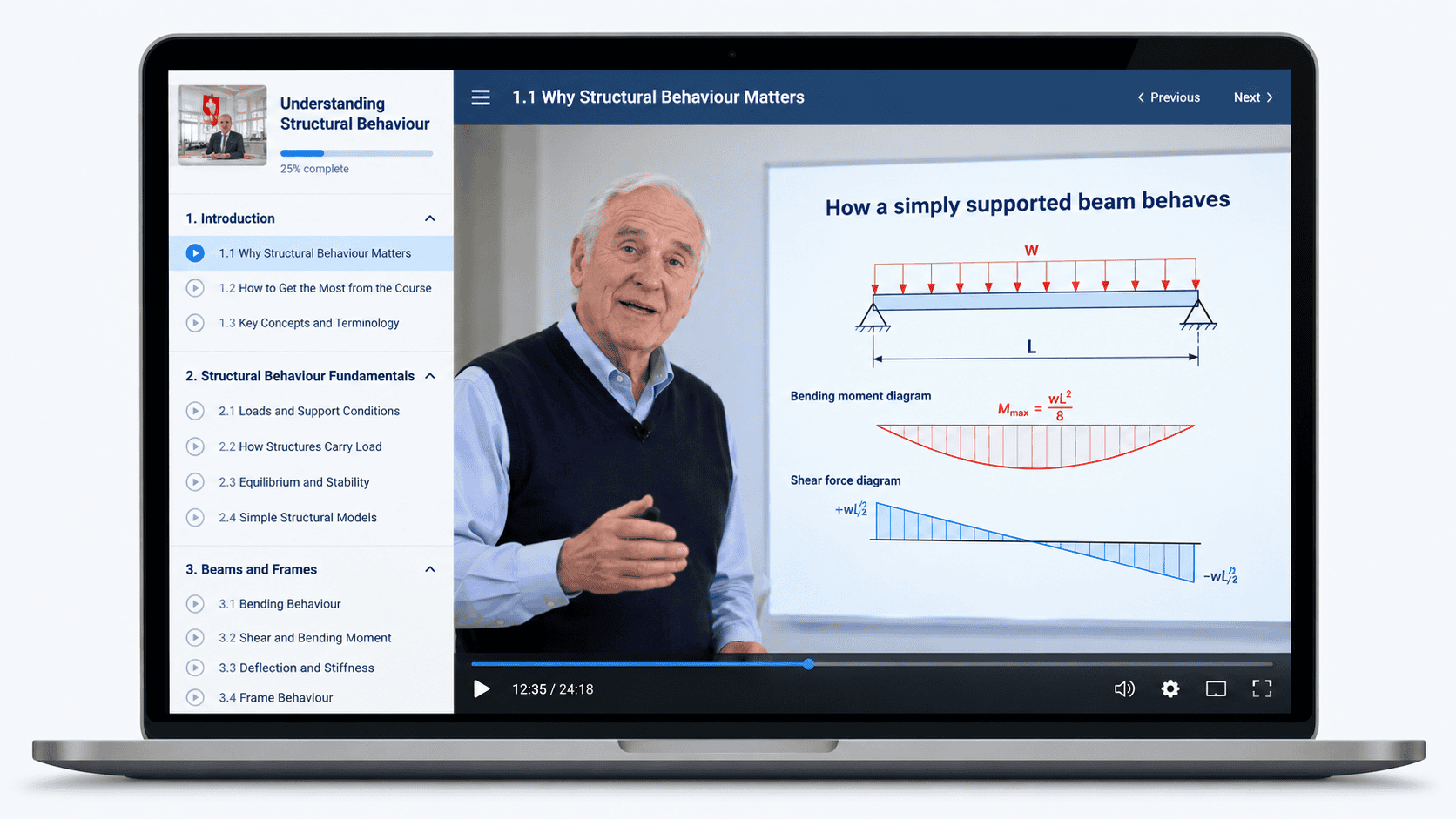
Develop the understanding you need to check the answer.
Start Understanding Structural BehaviourWHAT ENGINEERS SAY
AI WILL KEEP PRODUCING ANSWERS.
ENGINEERS STILL HAVE TO CHECK THEM.
Develop the structural understanding and engineering judgement needed to recognise when an answer makes sense — and when it does not.
Start Understanding Structural Behaviour