Understanding Structural Analysis
‘Understanding Structural Analysis’ explores the limitations of computer analyses and the checks that are essential. It also presents methods for approximate methods for checking computer output.
This course has been run for decades, assisting a variety of levels of expertise ranging from large-scale global organisations to graduates.
What you will be able to do
- Carry out an analysis in QSE and apply the appropriate checks to the result.
- Explain the limitations of computer analyses in structural engineering and design.
- Apply approximate methods to check computer output independently.
How the course works
The course is a series of video lessons. Watch them with a notebook open and work each example as it comes: the approximate checks only become routine once you have done them by hand. A certificate is issued on completion.
Who it is for
- Engineers who already use analysis software and want to know when not to trust what it returns.
- Graduates moving from hand analysis into a design office.
- Anyone who has worked through the qualitative method in Understanding Structural Behaviour and wants the next step.
The textbook and the kit
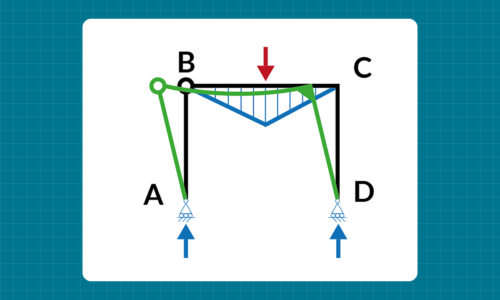
Understanding Structural Analysis is also a book, first published in 1984, which treats the same qualitative method as a graphical exercise with every stage of the explanation backed by a diagram. Understanding Structural Analysis — the book. The Structural Model Kit takes the idea into your hands: build the frame, load it, draw the shape it takes, and read the reactions off it. Both are available on their own, or with the course.
Learning without a tutor
Most people who go looking for a structural analysis tutor are after the same three things: a defined path through the subject, worked examples done in front of them, and someone to say whether their reasoning is right. This course is the structured alternative. The video lessons run in a fixed order, each one is followed by examples worked through on screen, and the approximate checks — the part that is hardest to pick up from a book alone — are demonstrated rather than described. You can revisit any lesson as often as you need to, and a certificate is issued when you finish. What it cannot do is look at your own project and tell you what to do with it. For that you still need an engineer.
Course details
- Video lessons, self-paced and online, in the browser on any device
- Analysis in QSE — the software David Brohn developed at QSE, free for training use. QSE details and download, and the licence terms before you install it.
- Certificate on completion
What people say about this course
★★★★★
I liked this course!
★★★★★
Hi David Brohn, I would like to express my appreciation for the Structural Analysis course. The content was extremely valuable, and I gained significant knowledge throughout the program. The course was well-structured, and each module helped deepen my understanding of fundamental and advanced analysis methods. I found the following topics especially useful: 1.Use of QSE Software – The practical sessions greatly improved my ability to model and analyze structural systems using the software. 2.Equilibrium Concepts – The clear explanations strengthened my understanding of basic principles essential for all structural analysis.…
★★★★★
Informative Lectures
Course Features
- Lectures 10
- Quiz 0
- Duration 26 weeks
- Skill level All levels
- Language English
- Students 99
- Certificate Yes
- Assessments Yes
Curriculum
- 9 Sections
- 10 Lessons
- 12 Weeks
- Course Introduction1 Item
- Using QSE Software1 Item
- Equilibrium1 Item
- Slope Deflection Equations1 Item
- Stiffness Method of Analysis1 Item
- Stiffness Method - Moment Distribution1 Item
- Approximate Analysis of Structures2 Items
- Structural Sensitivity1 Item
- Course Certificate1 Item

5.0
3 reviews
★★★★★
I liked this course!
★★★★★
Hi David Brohn, I would like to express my appreciation for the Structural Analysis course. The content was extremely valuable, and I gained significant knowledge throughout the program. The course was well-structured, and each module helped deepen my understanding of fundamental and advanced analysis methods. I found the following topics especially useful: 1.Use of QSE Software – The practical sessions greatly improved my ability to model and analyze structural systems using the software. 2.Equilibrium Concepts – The clear explanations strengthened my understanding of basic principles essential for all structural analysis.…
★★★★★
Informative Lectures